Learn
The Charleston in American Mah Jongg
Last reviewed July 2, 2026
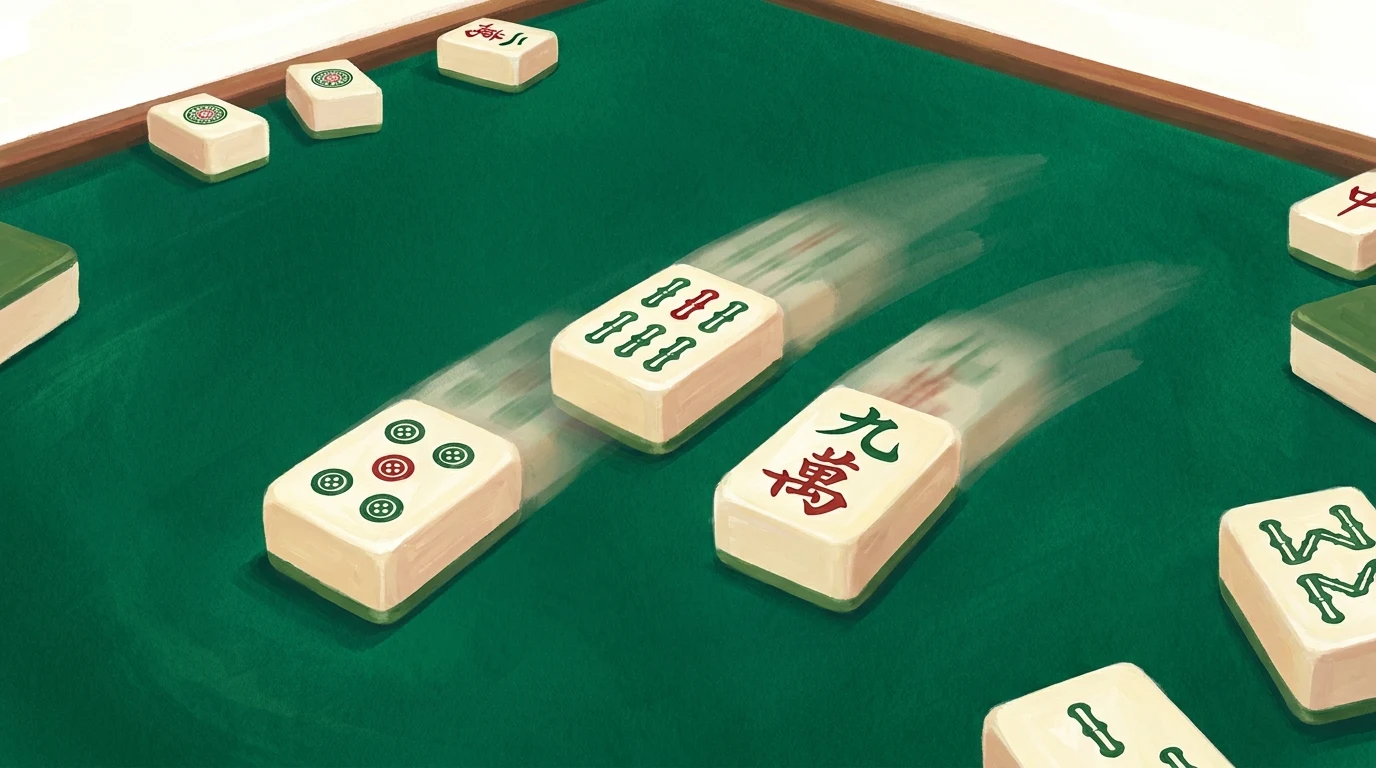
The Charleston is a ritual exchange of tiles, unique to American Mah Jongg, done before play begins to improve everyone's opening hand. American Mah Jongg is the US form of the older Chinese game, standardized by the National Mah Jongg League, and most of its parts are shared inheritance - but the Charleston itself is an American addition, with no counterpart in the original game.
The first Charleston
The first Charleston is required, and it always runs the same way. Each player passes three unwanted tiles to the right, then three across, then three to the left. Three passes, three tiles each, every player moving in step. By the time it is over, the tiles you started with have been reshuffled through three pairs of hands, and the hand in front of you has changed shape.
The second Charleston
A second Charleston may follow, but only if every player agrees to it. It is the same three passes in reverse: three left, three across, three right. A common mnemonic keeps the order straight - dance with LARry: Left, Across, Right. If even one player would rather not, the second Charleston simply does not happen, and the table moves on.
The courtesy pass
After the Charleston comes an optional courtesy pass, an exchange across the table between the two players sitting opposite each other. They trade zero to three tiles, the number agreed between the two of them. It is a small, last adjustment - a chance to hand off a tile or two you still do not want. House rules vary on the fine points here more than anywhere else, so this is the moment to defer to the table.
Blind passing
Blind passing is allowed only on the last pass of each Charleston - the first left, and the second right. On those passes you may pass along tiles you have just received without looking at them, sending them on blind. On every other pass you look at what you hold and choose. The blind pass is the one place the Charleston lets you move tiles you have not yet seen.
Stopping the Charleston
Any player may decline the second Charleston, with no explanation needed, in the moment before it begins. The first is part of every game; the second is a courtesy the whole table extends, and a single quiet pass on it is enough to end it there. No one has to say why.
Why it matters
The Charleston is how a rough opening hand becomes a workable one. Tiles you cannot use go out, tiles you need come in, and a deal that looked hopeless settles into something you can build on. It also rewards paying attention: watch what your neighbors pass and what they throw away, and the exchange tells you something about the hands taking shape around the table. The fine points differ from room to room, especially on the courtesy pass, so when in doubt, defer to the table and to the League's printed rulebook.
Sources
- American mahjong, Wikipedia.
- Tom Sloper's American mah-jongg FAQ (the Charleston, the passes, blind passing).
- The Charleston, American Mah-Jongg Association.